
SACIATICA PAIN & CRAMPS

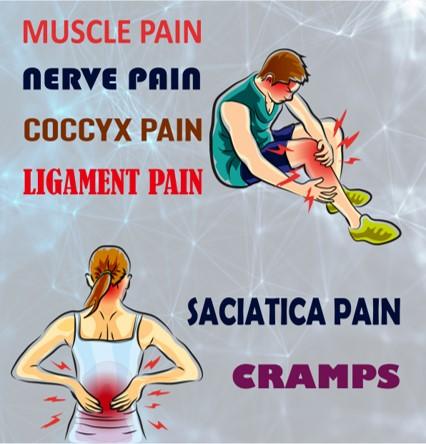
Sciatica pain is caused by compression or irritation of the sciatic nerve, which runs from the lower back down through the buttocks and into the legs. It is often due to a herniated disc, spinal stenosis, or other conditions that affect the lumbar spine Sciatica pain typically presents as a sharp, shooting pain that radiates from the lower back or buttocks down one or both legs. It may be accompanied by numbness, tingling, or weakness in the affected leg
Nerve pain, or neuropathic pain, can result from damage or dysfunction of the nerves. This can occur due to conditions such as diabetes, infections, injuries, or diseases affecting the nervous system Nerve pain may present as a sharp, burning, or stabbing sensation, often described as electric shock-like. It can be constant or intermittent and may be accompanied by numbness, tingling, or weakness in the affected area
Coccyx pain, or coccydynia, is pain in the coccyx (tailbone) region. It can be caused by trauma or injury to the coccyx, repetitive strain, childbirth, or conditions such as coccygeal spasm or inflammation Coccyx pain is typically localized to the tailbone area and may worsen with sitting or pressure on the coccyx. It may be described as a dull ache or sharp pain and may radiate to the lower back or buttocks
Muscle cramps are sudden, involuntary contractions of one or more muscles, often caused by muscle fatigue, dehydration, electrolyte imbalances, or overuse of muscles Muscle cramps cause sudden, intense pain or tightening in the affected muscle, which may last for a few seconds to several minutes. Cramps may be accompanied by visible twitching or palpable knots in the muscle
Muscle pain, also known as myalgia, is a common condition characterized by discomfort or soreness in the muscles. It can range from mild to severe and may be acute (short-term) or chronic (long-term). Muscle pain can affect any part of the body and may result from various factors.
Ligament pain typically occurs when ligaments, which are tough bands of tissue that connect bones to each other and provide stability to joints, become stretched, torn, or inflamed. Ligament pain can occur in various parts of the body, but it is most commonly experienced in the joints, such as the knees, ankles, wrists, or elbows