
Conjunctivitis
- 28 Jun 2024
- 0 Comments
- Health

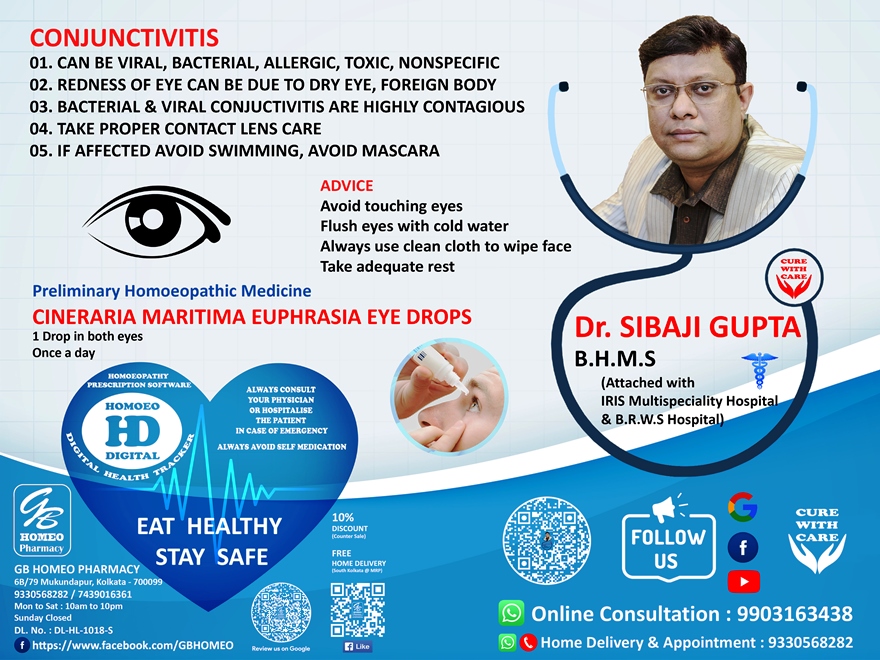
CONJUNCTIVITIS
Conjunctivitis, commonly known as pink eye, is an inflammation of the conjunctiva, the thin, transparent layer of tissue that covers the inner surface of the eyelid and the white part of the eyeball.
Viral Conjunctivitis
Often caused by viruses that cause the common cold, such as adenovirus. It's highly contagious and can spread through respiratory droplets or by touching contaminated surfaces.
Bacterial Conjunctivitis
Caused by bacteria such as Staphylococcus aureus, Streptococcus pneumoniae, or Haemophilus influenzae. It can result from an eye infection or as a secondary infection due to a cold or respiratory infection.
Allergic Conjunctivitis
Triggered by allergens such as pollen, dust mites, pet dander, or certain chemicals. It's not contagious.
Chemical Conjunctivitis: Caused by exposure to irritants like chlorine in swimming pools, air pollution, or harsh chemicals. It's not contagious.
Symptoms
Redness of the eye(s)
Watery or mucous discharge from the eye(s)
Itching or burning sensation in the eye(s)
Grittiness or foreign body sensation
Swelling of the eyelids
Sensitivity to light (photophobia)
Diagnosis
Diagnosis is typically based on symptoms and a physical examination of the eye(s) by a healthcare professional.
In some cases, a swab of the conjunctiva may be taken to determine the cause, especially if bacterial conjunctivitis is suspected.
Prevention
Practice good hygiene, including regular handwashing, especially during cold and flu seasons.
Avoid touching or rubbing your eyes, especially if you've been in contact with someone who has conjunctivitis.
Avoid sharing towels, pillows, or eye makeup with others during an outbreak of conjunctivitis.
If you have allergic conjunctivitis, try to minimize exposure to allergens that trigger your symptoms.




0 Comments