
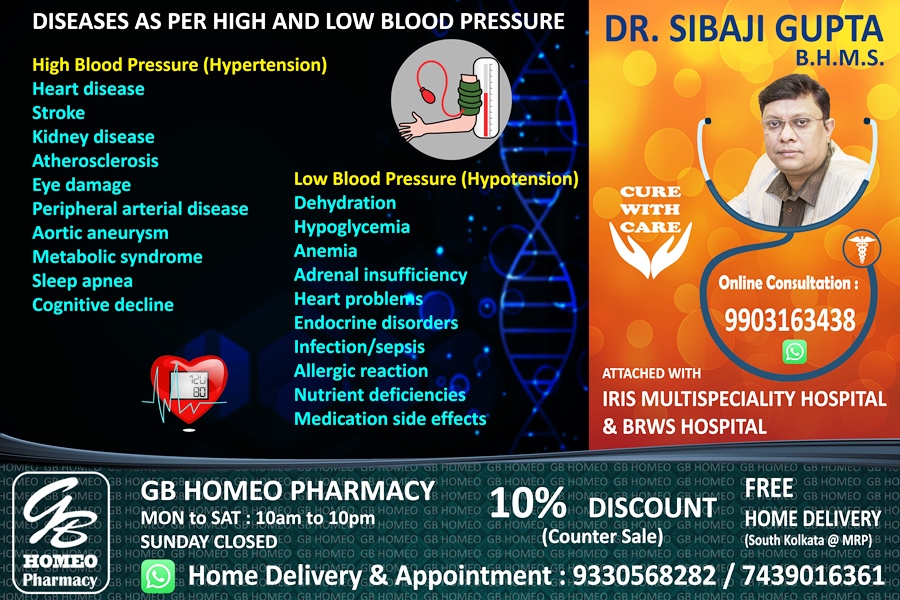
High & Low Blood Pressure Diseases
- 28 Jun 2024
- 0 Comments
- Health

HIGH BLOOD PRESSURE (HYPERTENSION)
High blood pressure occurs when the force of blood against the walls of your arteries is consistently too high.
Causes
Primary (essential) hypertension: The exact cause is often unknown, but factors such as genetics, unhealthy lifestyle habits (e.g., poor diet, lack of exercise, smoking), and aging can contribute.
Secondary hypertension
This type is caused by an underlying condition or medication, such as kidney disease, hormonal disorders, obstructive sleep apnea, or certain medications like nonsteroidal anti-inflammatory drugs (NSAIDs) or birth control pills.
Symptoms
Often, high blood pressure has no symptoms and is discovered during routine checkups.
In severe cases or when complications arise, symptoms may include headaches, shortness of breath, nosebleeds, and vision changes.
Complications
Chronic high blood pressure can lead to serious health problems such as heart disease, stroke, kidney disease, and vision loss.
Lifestyle changes
Diet modifications (reducing salt intake, increasing fruits and vegetables), regular exercise, weight management, limiting alcohol consumption, quitting smoking.
LOW BLOOD PRESSURE (HYPOTENSION)
Low blood pressure occurs when the force of blood against the artery walls is lower than normal, leading to inadequate blood flow to vital organs.
Causes
Orthostatic hypotension: A sudden drop in blood pressure upon standing up from a sitting or lying position.
Dehydration, blood loss, severe infection (septic shock), severe allergic reaction (anaphylaxis), endocrine disorders (such as adrenal insufficiency or hypothyroidism), heart problems (such as bradycardia or heart valve disorders), and certain medications can also cause low blood pressure.
Symptoms
Dizziness or light-headedness, fainting (syncope), blurred vision, nausea, fatigue, and confusion are common symptoms.
Symptoms may worsen when standing up quickly or after eating.
Complications
While low blood pressure is not always a cause for concern, severe or chronic hypotension can lead to reduced blood flow to vital organs, resulting in organ damage or failure.
Treatment
For orthostatic hypotension, strategies such as gradually changing positions, increasing fluid and salt intake, wearing compression stockings, and medication adjustments may be helpful.

0 Comments